How to choose a street photography worKSHOP
Street photography workshops are a catalyst for growth, and in my opinion the best way to spend your money to advance your photography. They drop you into unfamiliar streets, place you among like‑minded photographers, and give you the opportunity to spend the whole day shooting under the tutelage of someone who is working at a level you aspire to reach. It’s an exhilarating mix of challenge and discovery — long days, high step counts, and that addictive feeling of trying to use the lessons learned to make a good photograph.
Choosing which workshop to attend, though, is another story. With so many on offer, it’s worth knowing what really makes one valuable. Having attended workshops with Jonathan Jasberg, Eduardo Ortiz, Matt Stuart, Matt Hall (13th Second), and The Raw Society, photographing in London, Istanbul, and Kolkata, I feel that I am in a position to provide some advice to help you.
Here are the things I now weigh carefully before signing up to a new workshop.
1. Try and obtain first hand reviews
A glowing reputation, website, or Instagram feed can’t tell you what a workshop really feels like from the inside. Recommendations from past participants are invaluable — they reveal not only a photographer’s teaching style but also how they handle group dynamics, feedback, and the inevitable ups and downs of the week.
When people talk about a workshop leader being present, generous, and genuinely invested in spending time with each participant throughout the day, that’s a sign you’ll come away richer for the experience. On the other hand, reviews describing a lack of structure or support are red flags.
There are some very famous well known photographers who charge a lot of money for a workshop but do not spend a single minute in the streets with you, instead they set you a challenge for the day and then critique your work later. Ask yourself is that what you really want from a workshop, or would you rather see someone in action and learn from them firsthand how they approach a scene.
2. Make sure their style resonates
Before I book, I spend time studying the photographer’s body of work. Do their images move me? How do they compose their photographs? How do they tell a story?
Both Jonathan Jasberg and Eduardo Ortiz have similar styles, creating complex layered images reminiscent of Magnum photographers Alex Webb or Nikos Economopoulos, yet still full of emotion and with a clear narrative. Eduardo’s approach also speaks to his heritage from South America, and it feels looser and more organic - for example using tilted horizons to add dynasim. And The Raw Society in Kolkata? Immersive, demanding, and deeply human — a kind of photographic bootcamp that forces you to connect as much as observe.
If a photographer’s style doesn’t resonate with you, it probably won’t land during their workshop either. Teaching and imagery are always linked.
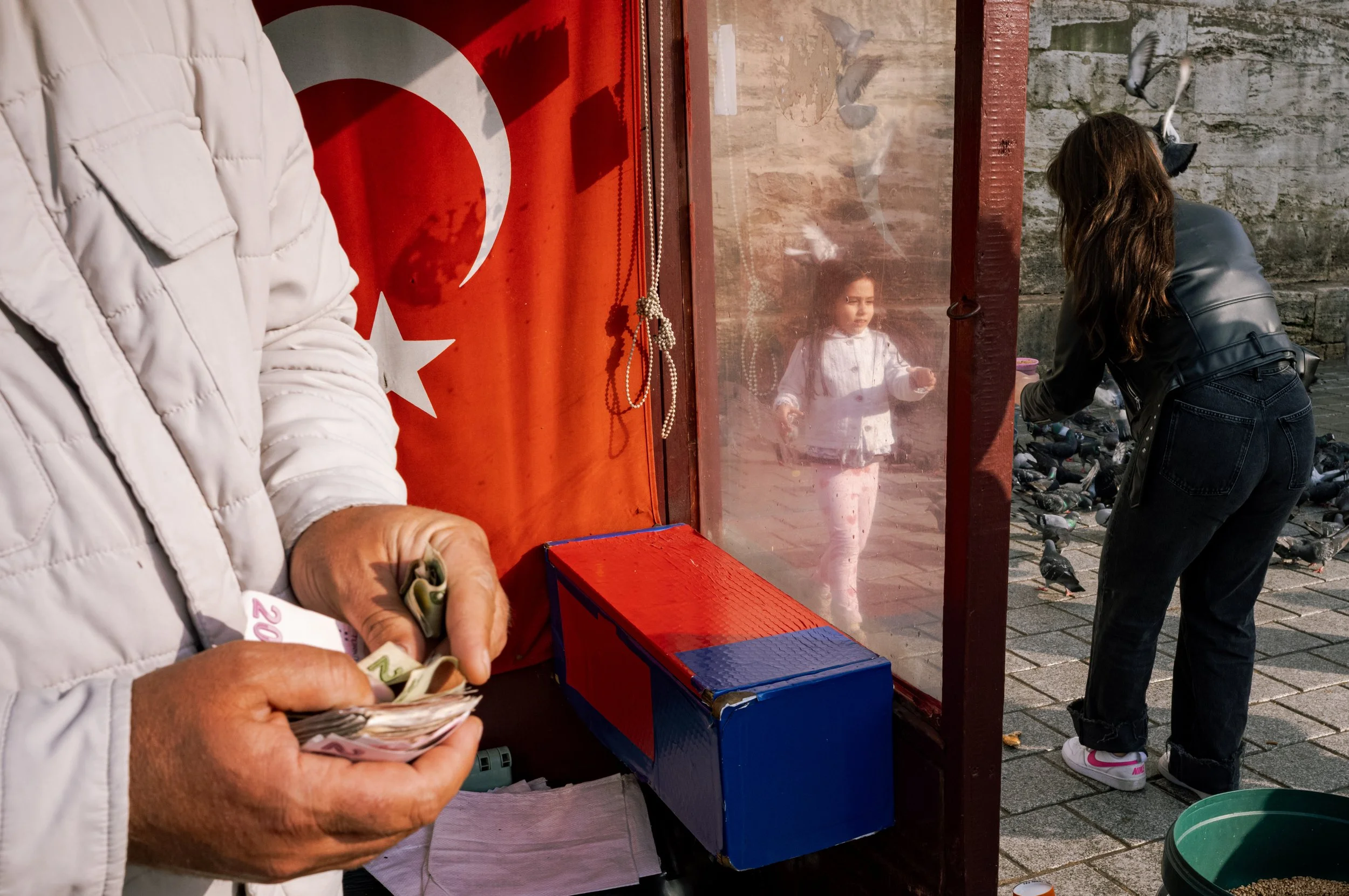
Taken in Istanbul on a workshop with Jonathan Jasberg
3. Check how they give feedback
The photographs you make during a workshop are only half the story — the other half unfolds during editing and critique. The best workshops include daily review sessions where you narrow hundreds of frames down to the few that really work.
Jonathan Jasberg built editing sessions into the rhythm of the week, guiding us through sequencing and selection while explaining why certain images spoke louder than others. This often involved very late nights after long days of shooting, but were extremely valuable. In Kolkata, The Raw Society dedicated evenings to discussing intention with the group— not just what worked, but why. That time in front of the laptop, seeing your work dissected with care, is where the growth happens.
When researching, check how much of the schedule is reserved for editing and critique. If feedback is treated as an afterthought, you’ll miss the opportunity to understand your progress in real time.
4. Understand how the group is managed and how large it will be
Street photography workshops can range from tightly coordinated to completely loose, and small intimate groups of 4-5 to large and unwieldy groups of 10+. Personally, I value a balance: enough structure to keep everyone safe and connected, but enough freedom to allow you to explore independently. There’s nothing worse than having all of you on one street at the same trying to shoot the same subject or scene.
Many leaders now use WhatsApp location tracking to keep the group loosely together throughout the day. That system lets you scatter through a neighbourhood, knowing help or company is just a message away. The best workshop leaders handle this quietly and efficiently — ensuring everyone gets time to shoot 1:1 with them without worrying about logistics.
This kind of organisation says a lot about an instructor. If they can adeptly manage multiple wandering photographers in a foreign city, they likely know how to manage your learning experience too.
5. Choose a location that excites you
The setting is more than a backdrop — it shapes your energy and curiosity. Istanbul, with its sensory overload and shifting light, challenged me to slow down and carefully compose. Kolkata was pure life on the move, where every corner had a new scene to capture. London remains one of the greatest cities globally for finding the extraordinary in the every day.
Pick somewhere that fascinates you. The more drawn you are to a place, the more willing you’ll be to push yourself creatively and endure the inevitable exhaustion of long days on your feet.
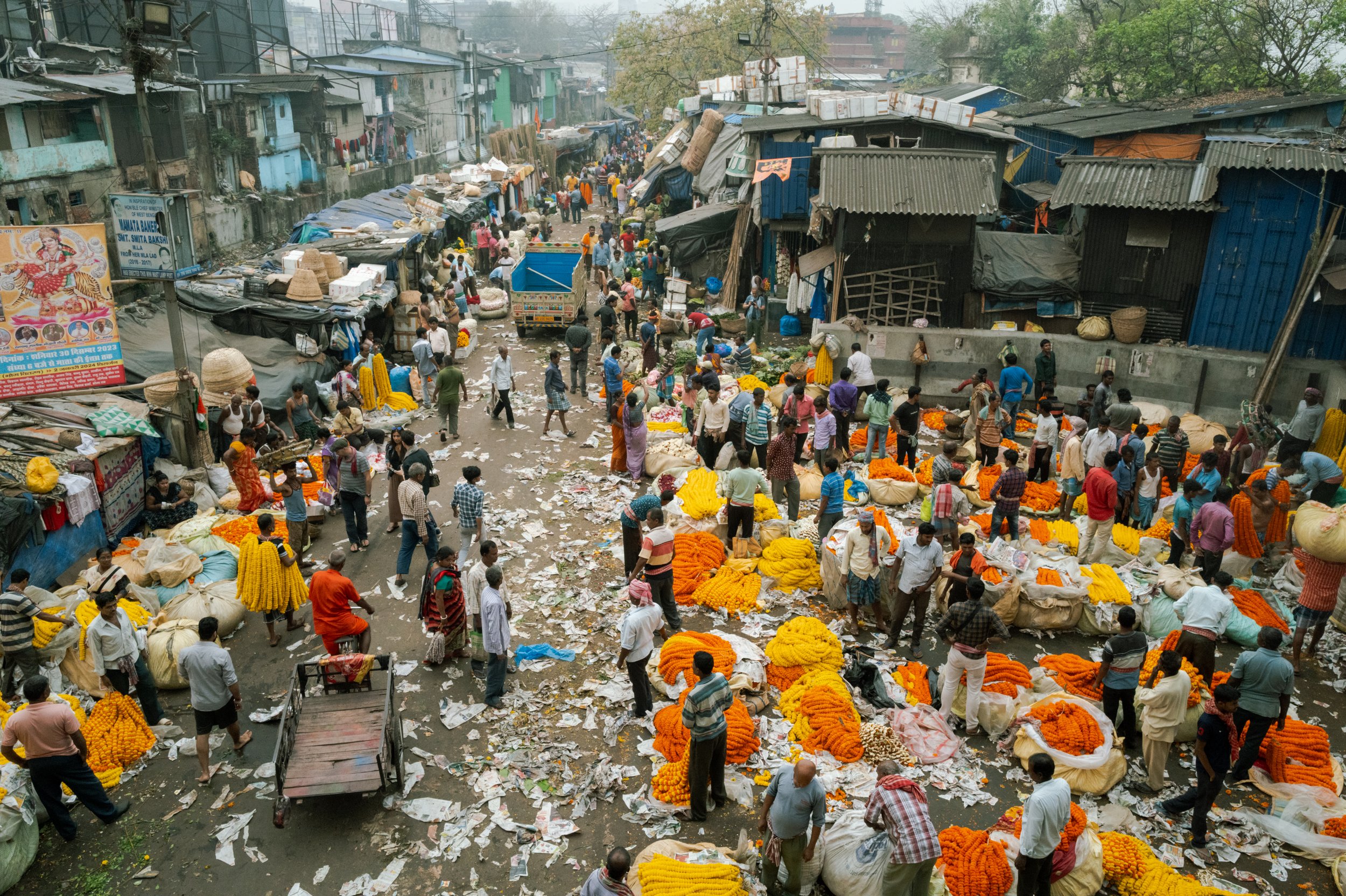
Taken in Kolkata on a workshop with The Raw Society
6. Do your homework outside the website
Before committing, I spend time online listening to interviews, watching YouTube content, and tuning into photography podcasts. Hearing how a workshop leader talks about their process — how they explain composition, ethics, or approach — offers clues about how they teach. There is a great YouTube video where Jonathan Jasberg explains his entire process, and watching this demonstrated to me that I would learn a great deal from him in person. Similarly there is a YouTube video where Tim Jamieson interviews Eduardo Ortiz in Istanbul while he demonstrates his approach - this gives a fantastic overview of what it is like to attend a workshop with Eduardo.
If someone articulates their ideas clearly, seems generous in conversation, and comes across as likeable and genuine, that usually translates into an open, informative workshop environment. It’s also a good way to confirm whether their philosophy aligns with your own.
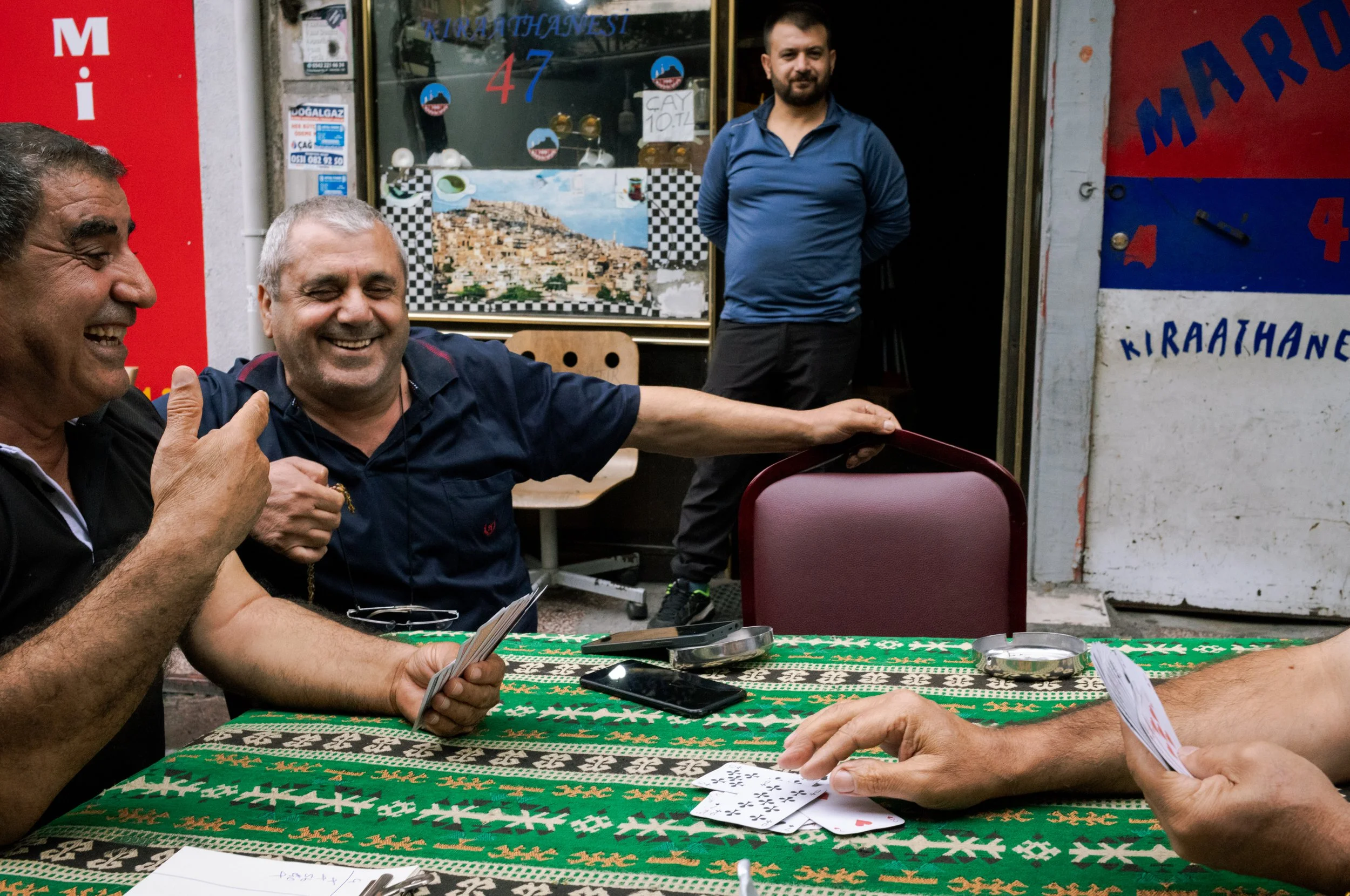
Taken in Istanbul on a workshop with Eduardo Ortiz
7. Value one‑to‑one moments
Finally, ask how much personal feedback time is included. Group critiques are helpful, but the conversations that happen one‑to‑one are where breakthroughs occur. A few words of direct, honest feedback can really reset your photographic direction entirely.
Looking ahead
If there’s one name I’ve yet to cross off my list, it’s Maciej Dakowicz. Maciej has been teaching workshops internationally since 2010, he only takes 4-5 participants on a workshop, and many of his participants have gone on to win awards for their work, exhibited, and published zines or books of their work.
Ultimately, choosing a street photography workshop is like composing an image. You look for alignment — between teacher, place, and purpose. Get those elements right, and you’ll come home not just with stronger photographs, but with a clearer sense of how you see the world.